Crypto Mining: The Complete 2025 Advanced Guide
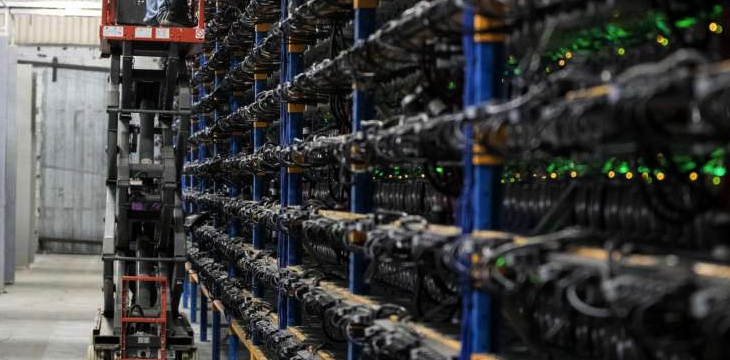
Crypto mining remains one of the most fundamental pillars of the blockchain industry. Even with the evolution of Proof-of-Stake (PoS) and scalable Layer-2 networks, Proof-of-Work (PoW) mining continues to secure major blockchains like Bitcoin and various altcoins. But mining is no longer what it was in 2013 or 2017—it is now a global, industrial-scale sector with advanced hardware, fluctuating economic pressures, and cyclical profitability tied to halving events.
This guide breaks down everything you need to know about cryptocurrency mining today.
🔷 1. What Is Crypto Mining?
Crypto mining is the computational process of validating transactions and securing a blockchain network using a Proof-of-Work (PoW) consensus mechanism. Miners compete to solve cryptographic puzzles, and the first to solve each block receives:
# Block reward (newly minted coins)
# Transaction fees
This reward system is what brings new coins into circulation
🔷 2. How Proof-of-Work (PoW) Works
PoW requires miners to generate trillions of hash attempts per second to find a valid block hash. The network’s mining difficulty adjusts to keep block times consistent (e.g. Bitcoin ~10 minutes).
The cycle:
1. Miners gather unconfirmed transactions.
2. They hash the block header + nonce repeatedly.
3. If the hash is below the difficulty traget, they win.
4. The block is added to the blockchain.
5. The miner receives the block reward + fees.
This process ensures:
# Decentralization
# Network security
# Economic incentive alignment
🔷 3. Mining Hardware: ASIC, GPU & CPU
🟩 ASIC Miners (Application-Specific Integrated Circuits)
# Extremely powerful and efficient
# Used mainly for Bitcoin, Litecoin, Kadena, etc.
# Expensive but highest profitability
# Industrial-scale mining relies on ASICs
🟦 GPU Mining (Graphics Cards)
# Versatile: used for altcoins like Ravencoin or Ergo
# Lower profitability than ASICs
# Popular for hobbyists
# Also used in AI/ML when crypto mining is unprofitable
🟨 CPU Mining
# Least profitable
# Used for privacy coins like Monero (RandomX algorithm)
# Useful for decentralization, not profit
🛠 Other Components
# Mining rig frames
# Power supplies
# Cooling setups
# Mining software (CGMiner, NiceHash, HiveOS)
🔷 4. Mining Economics — Profitability Factors
Mining profitability in 2025 depends on multiple variables:
1. Hash Rate
More hash power = more mining competition
Less hash power = easier to mine
2. Mining Difficulty
Automatically adjusts to maintain block time.
As more miners join → difficulty increases → profits drop.
3. Energy Costs
Electricity is the biggest operational expense.
Most profitable miners operate where power is cheap or renewable.
4. Hardware Cost & Lifetime
ASICs lose efficiency over time.
ROI depends on:
# Purchase price
# Hash rate
# Efficiency (J/TH)
5. Token Price
Mining profitability closely follows market cycles.
Bull markets = high profitability
Bear markets = high miner capitulation
🔷 5. Bitcoin Halving Events
Bitcoin’s block reward halves every 210,000 blocks (~4 years).
Historical Halvings
# 2012: 50 → 25 BTC
# 2016: 25 → 12.5 BTC
# 2020: 12.5 → 6.25 BTC
# 2024: 6.25 → 3.125 BTC
Effects of Halving:
1. Reduces new supply by 50%
2. Increases mining difficulty due to miner competition
3. Historically triggers major bull cycles within 12–18 months
4. Forces miners to upgrade hardware or shut down inefficient rigs
Mining becomes twice as hard overnight, pressuring miners to innovate.
🔷 6. Types of Crypto Mining
1. Solo Mining
# One miner compete alone
# Very high variance
# Rarely profitable unless you have massive hash power
2. Pool Mining
# Miners combine hash power
# Rewards distributed proportionally
# Most common method
3. Cloud Mining
# Renting hash power from a provider
# Often unprofitable or scam-prone
# Only vaible with reputable operators (rare)
4. Mobile Mining (Not Recommended)
# Very low hash rate
# Mostly for educational use
🔷 7. Environmental Impact of Mining
Mining consumes significant electricity, leading to environmental debates.
However, new trends are reducing this impact:
# Renewable energy use (hydro, solar, wind)
# Methane-flaring crypto mining
# Waste-heat recycling
# Stranded energy utilization
Bitcoin mining is increasingly shifting toward **carbon-neutral** operations.
🔷 8. Crypto Mining as an Investment
Mining is no longer just plug-and-play—it is a high-risk, high-reward investment.
Pros
# Generates passive income
# Provides exposure without buying coins
# Physical hardware asset
# Hedge against future token price increases
Cons
# High initial hardware costs
# Energy-intensive
# Market volatility affects ROI
# Halving routinely slash profitability
# ASIC miners depreciate quickly
Mining is best for
# Those with cheap electricity
# Tech-savy users
# Long-term belivers in PoW ecosystems
🔷 9. The Future of Crypto Mining (2025 & Beyond)
# Greater focus on renewable energy
# ASIC manufacturers becoming more competitive
# Bitcoin Layer-2 scaling boosts transaction fees
# AI + mining infrastructure overlap
# Geographic movement to energy-rich regions (Iceland, Texas, Kazakhstan)
Mining isn’t dying—it’s evolving.
🏁 Final Thoughts
Crypto mining remains a crucial backbone of decentralized finance and blockchain security. While PoS has risen in popularity, PoW continues to dominate major networks, offering unmatched security, immutability, and economic incentive alignment.
Success in mining now requires:
# Efficient hardware
# Startegic electricity sourcing
# Undrstanding halving cycles and difficulty
# Long-term commitment
If approached correctly, mining can still be a powerful investment and technology opportunity.


About
Start your crypto journey with InfoCrypto. We share valuable tools and information to help you win in the crypto space, from technicals to fundamentals we've got you!