🔀 Crypto Forks: The Complete Advanced Guide
Introduction: What Are Crypto Forks?
A crypto fork occurs when a blockchain network splits or changes its protocol rules, resulting in two possible paths forward. Forks are an essential mechanism for upgrading, fixing, or evolving blockchain networks without relying on centralized decision-making.
Forks can introduce new features, improve security, reverse exploits, or create entirely new cryptocurrencies.
Why Crypto Forks Exist
Blockchains are decentralized systems governed by consensus rules. When participants disagree on changes or when upgrades are required, a fork may occur.
Common reasons for forks include:
# protocol upgrades
# security patches
# feature additions
# performance improvements
# governance disputes
# economic disagreements
# emergency response to hacks
Forks are not bugs — they are a feature of decentralized governance
Types of Crypto Forks
1. Soft Fork
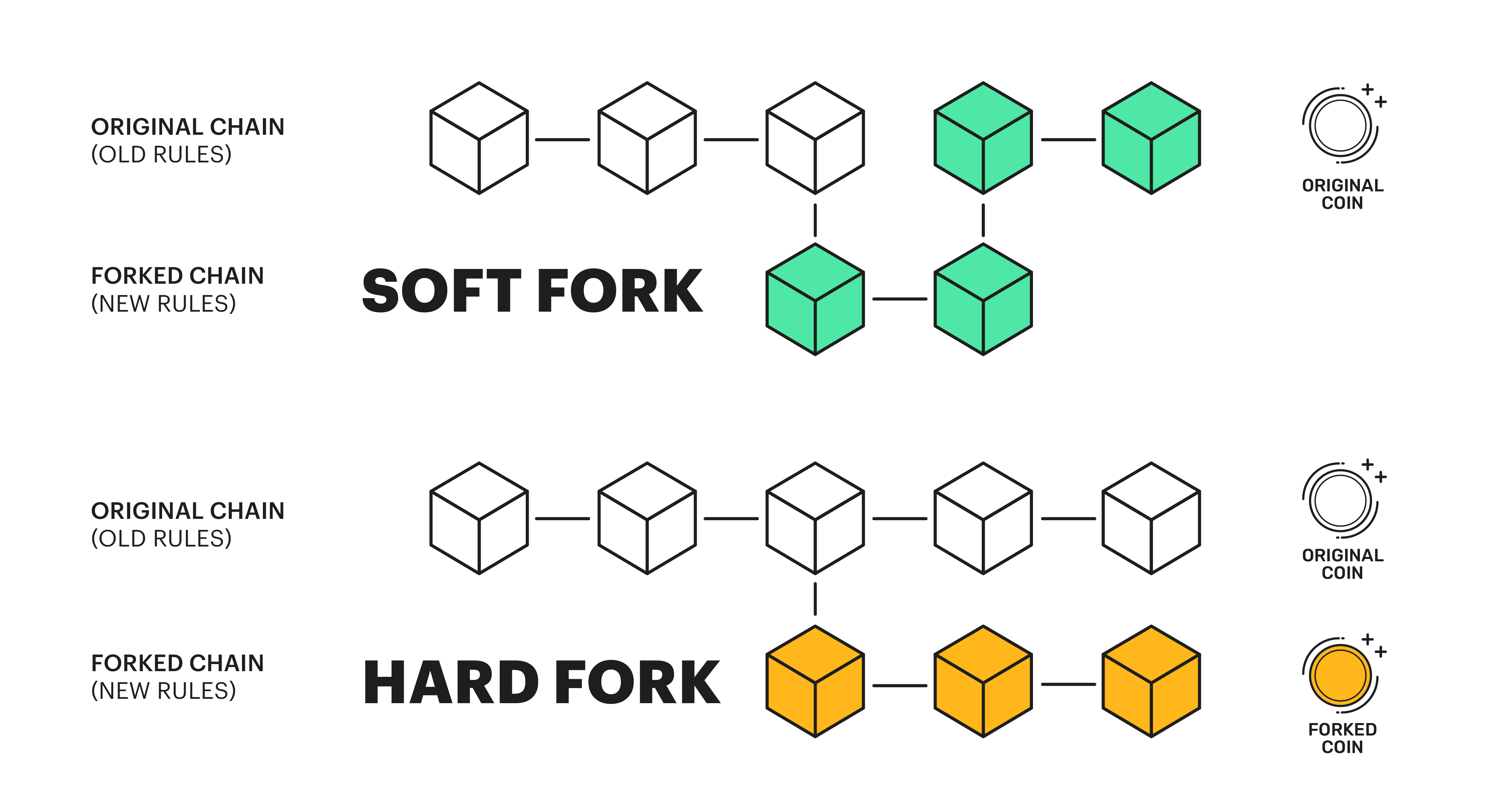
A soft fork is a backward-compatible protocol upgrade.
✅ Key Characteristics:
# Old nodes can still recognize new blocks
# Network remains unified
# Requires majority miner/validator adoption
# Often used for incremental improvements
✅ Example Use Cases
# block size optimizations
# opcode changes
# security enhancements
Soft forks allow blockchains to upgrade smoothly without splitting the chain.
2. Hard Fork
A hard fork is a backward-incompatible upgrade that causes a permanent chain split unless all nodes upgrade.
✅ Key Characteristics:
# Old nodes reject new blocks
# Creates two independent blockchains
# May result in a new cryptocurrency
# Requires full node upgrades
✅ Hard forks can be:
# Planned (scheduled upgrades)
# Contentious (community disagreements)
# Emergency forks (exploit or hack response)
Planned vs Contentious Forks
Planned Forks
Used for major upgrades where the community agrees.
Examples:
# major protocol updates
# consensus mechanism transitions
# scalability improvements
These usually do not create new coins.
Contentious Forks
Occur when the community cannot reach consensus.
Results:
# chain split
# new crypto assets
# ideological or economic division
These forks are typically driven by governance disputes.
📜 Famous Crypto Fork Examples
Bitcoin Cash (BCH)
Forked from Bitcoin due to block size disagreements.
Bitcoin SV (BSV)
Forked from Bitcoin Cash over governance disputes.
Ethereum Classic (ETC)
Ethereum forked after the DAO hack reversal controversy.
Monero Forks
Used to fight ASIC mining and enhance privacy.
These examples demonstrate how forks shape blockchain history.
⚙️ How Crypto Forks Work (Technical Overview)
1. Developers propose protocol changes
2. Upgrade code is released
3. Nodes choose whether to upgrade
4. At a specific block height, rules change
5. If consensus differs → a fork occurs
6. Nodes follow the chain matching their software rules
Forks reflect economic and ideological alignment, not authority.
💰 Crypto Forks & Token Economics
Chain Split Outcomes
# Holders may receive tokens on both chains
# Mining/validator power fragments
# Liquidity splits
# Market volatility increases
Airdrop Effect
Sometimes forks credit users with equivalent coins on the new chain.
📈 Crypto Forks & Investing Implications
✅ Potential Benefits
# free forked tokens
# innovation acceleration
# improved scalability or security
# clearer governance direction
⚠️ Risks
# network confusion
# replay attacks
# price volatility
# reduced security from hash-rate split
# abandoned forked projects
Forks often trigger speculative trading behavior.
🔐 Security Considerations During Forks
# Replay protection may be required
# Wallet compatibility matters
# Exchanges may freeze deposits/withdrawals
# Scam tokens often emerge
Investors should avoid moving funds during contentious forks.
🧑⚖️ Governance & Fork Decisions
Forks highlight the governance model of blockchains:
# informal developer leadership
# miner/validator incentives
# user economic power
# market-driver consensus
There is no voting authority — the market decides which chain survives.
🔮 The Future of Crypto Forks
🚀 Fewer Contentious Forks
Improved governance frameworks reduce chain splits.
⚙️ Modular Blockchains
Upgrades via modular layers may replace forks.
🌐 Social Consensus Tools
More off-chain coordination before upgrades.
🧩 Rollups & L2s
More experimentation without forking base layers.
Forks will remain important — but more controlled.
🏁 Conclusion
Crypto forks are a fundamental feature of decentralized systems, enabling blockchains to evolve, innovate, and correct mistakes without centralized control. While forks can introduce risk and volatility, they also represent freedom of choice and market-driven governance.
Understanding forks is essential for developers, investors, and users navigating the crypto ecosystem.


About
Start your crypto journey with InfoCrypto. We share valuable tools and information to help you win in the crypto space, from technicals to fundamentals we've got you!