What Is Blockchain?
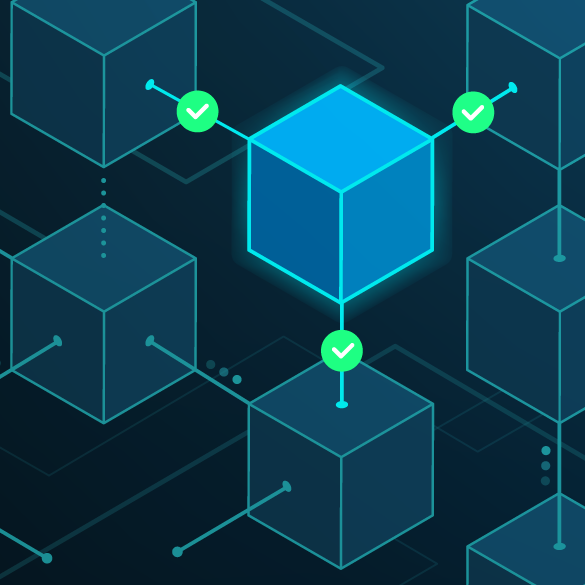
Blockchain is a decentralized, distributed digital ledger that records transactions across a network of computers. It ensures transparency, security, and immutability without relying on a central authority like a bank or government.
Originally invented for Bitcoin, blockchain has expanded into thousands of applications across finance, supply chain, healthcare, government, and Web3.
At its core, blockchain enables trustless systems, where parties can transact securely without intermediaries.
How Blockchain Works: The Core Components
Blockchain relies on four fundamental elements:
1. Blocks
A blockchain consists of a chain of "blocks," each containing:
# A list of transactions
# A timestamp
# A cryptographic hash
# The hash of the previous block
This creates a permanent, tamper-resistant record.
2. Nodes
Nodes are computers running blockchain software. They:
# Validate transactions
# Maintain copies of the ledger
# Secure the network
# Participate in consensus
Types of nodes include full nodes, validator nodes, and light nodes.
3. Consensus Mechanisms
Consensus ensures all nodes agree on the state of the blockchain.
The most common mechanisms:
Proof of Work (PoW)
Used by Bitcoin. Miners solve complex equations to add new blocks.
Proof of Stake (PoS)
Used by Ethereum, Cardano, Solana. Validators stake cryptocurrency to secure the network.
Other mechanisms:
# Delegated PoS
# Proof of Authority
# Proof of History (Solana)
# Byzantine Fault Tolerance variants
Each mechanism balances decentralization, scalability, and security.
4. Cryptography
Cryptographic algorithms protect user data and verify transactions through:
# Hashing (SHA-256, Keccak-256)
# Public / private key encryption
# Digital signatures
This ensures authenticity and prevents tampering.
Why Blockchain Is Considered Trustless & Immutable
Trustless
Participants don’t need to trust each other — they trust the protocol.
Immutable
Once added, data cannot be changed without altering every block after it — practically impossible on decentralized networks.
Decentralized
No single entity can shut down or manipulate the system.
Smart Contracts: The Logic Layer of Blockchain
Smart contracts are self-executing programs stored on the blockchain.
They automatically execute actions when predefined conditions are met.
Uses include:
# DeFi lending
# Automated trading
# NFTs
# DAOs (Decentralized Autonomous Organizations)
# Escrow services
# Tokenized assets
Ethereum pioneered smart contracts, and many blockchains now support them.
Blockchain Mining and Validation
Mining (PoW)
Miners use computational power to solve mathematical puzzles. The winner adds a new block and receives rewards (new coins + fees).
Validation (PoS)
Validators lock up (“stake”) coins to secure the network. They are rewarded for honest behavior and penalized (slashed) for malicious actions.
Blockchain Economics & Tokenization
Blockchain economics — known as cryptoeconomics — combines computer science and economic incentives.
Key elements include:
1. Token Supply Models
# Fixed supply (e.g. Bitcoin)
# Inflationary supply (e.g. Dogecoin)
# Deflationary supply (e.g. BNB burns)
2. Incentives
Rewards encourage nodes to maintain the network.
3. Tokenization
Real-world assets can be converted into digital tokens, such as:
# Real estate
# Gold
# Bonds and treasuries
# Artwork
# Equity
Tokenization unlocks liquidity and fractional ownership.
Pros and Cons of Blockchain
Advantages
# Transparency
# Security
# Decentralization
# Reduced costs (no intermediaries)
# Global accessibility
# Faster settlements
# Immutable recordkeeping
Disadvantages
# Scalability issues (Layer 1 networks)
# Energy usage (PoW chains)
# Complex user experience
# Regulatory uncertainty
# Irreversible errors (lost keys)
Real-World Use Cases of Blockchain
1. Financial Services & DeFi
Decentralized lending, borrowing, trading, insurance, and banking.
2. Supply Chain & Logistics
Immutable tracking of products from origin to delivery.
3. Healthcare
Secure patient records and data sharing.
4. Identity & Authentication
Decentralized identity (DID) systems.
5. Gaming & Metaverse
Player-owned assets and in-game economies.
6. Government
Land registries, voting systems, tax automation.
7. Tokenized Assets
Fractional ownership of property, bonds, or commodities.
Blockchain has use cases far beyond cryptocurrency.
Blockchain Security: Why It’s Hard to Hack
1. Decentralization
Thousands of nodes replicate the ledger — hacking one node does nothing.
2. Cryptography
Mathematically hardened against tampering.
3. Consensus Mechanisms
Attackers would need to control 51% of the network — extremely expensive.
4. Game Theory Incentives
Validators earn more by behaving honestly than by attacking.
Blockchain is secure, but vulnerabilities may arise in apps built on top of it (smart contact bugs, exchange hacks, user error).
Enterprise Blockchain
Companies use private or hybrid blockchains for:
# Supply chain automation
# Data integrity
# Finance and settlement
# Insurance
# Auditing
# Compliance reporting
Major platforms include Hyperledger, Quorum, Corda, and Polygon CDK.
The Future of Blockchain Technology
1. Layer 2 Scaling
Rollups, sidechains, and state channels reduce costs and improve speed.
2. Interoperability
Blockchains will communicate seamlessly via bridges and cross-chain protocols.
3. Real-World Asset Tokenization
Global markets for tokenized stocks, bonds, and real estate will expand.
4. AI + Blockchain Integration
AI agents using blockchain for secure data and autonomous finance.
5. Enterprise and Institutional Adoption
Banks and Fortune 500 companies already integrate blockchain for settlement and tracking.
6. Regulatory Clarity
Governments are creating frameworks that legitimize blockchain technology.
Blockchain is evolving from an experimental technology to global infrastructure.
Conclusion
Blockchain is more than the foundation of cryptocurrency — it’s a revolutionary technology transforming finance, commerce, data management, and digital ownership. Its decentralized, secure, and transparent nature makes it a powerful alternative to traditional centralized systems. As scalability improves and real-world adoption increases, blockchain is poised to become a core component of the global digital economy.


About
Start your crypto journey with InfoCrypto. We share valuable tools and information to help you win in the crypto space, from technicals to fundamentals we've got you!