💡 What Are Smart Contracts?
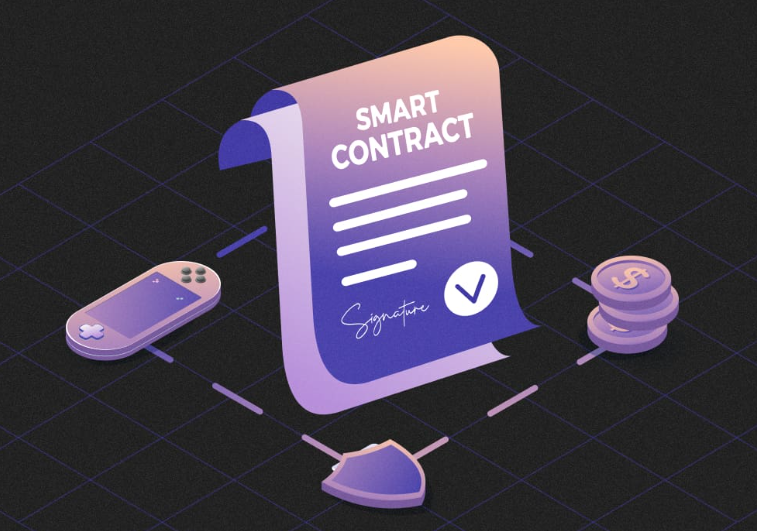
Smart contracts are self-executing digital agreements stored on a blockchain. They automatically execute actions — such as transferring funds or triggering workflows — when predetermined conditions are met.
Unlike traditional contracts, smart contracts require no lawyers, banks, or intermediaries. They run exactly as programmed, making them:
# Trustless (no third party required)
# Transparent
# Immutable (unable to be changed) once deployed
# Secure due to blockchain consensus mechanisms.
Smart Contracts are the foundation of DeFi, NFTs, DAOs and Web3 Applications.
🔧 How Smart Contracts Work
Smart contracts are written in programming languages like Solidity (Ethereum), Rust (Solana), or Move (Aptos/Sui). Once deployed to a blockchain they operate automatically based on coded rules.
🔍 Core Components of a Smart Contract
1. Code/Logic: The programmed rules and functions.
2. State: Data stored within the contract (balances, owenership, variables).
3. Events: Logs used to track contract actvity.
4. Functions:
# View functions - read data.
# Write functions - modify the blockchain (requires gas fees).
When a user interacts with a smart contract, the blockchain executes the code consistently across all nodes via a virtual machine (e.g. the Ethereum Virtual Machine — EVM).
⛓️ Smart Contract Architecture
A typical smart contract system includes:
1. Frontend (Interface) - Web or mobile UI used to interact with the contract (e.g. Uniswap).
2. Backend Logic (The Smart Contract) - Contains the execution logic deployed on the blockchain.
3. Blockchain Network - Ensures decentralized execution and data storage.
4. Oracles (Optional) - Services like Chainlink that feed real-world data (prices, weather, events) into smart contracts.
🏦 Smart Contract Use Cases
Smart contracts enable automation, transparency, and decentralization across industries.
1. Decentralized Finance (DeFi)
DeFi platforms use smart contracts to handle financial activities without banks:
# Lending & borrowing (AAVE, Compound)
# Decentralized Exchanges (Uniswap, Sushiswap)
# Yield farming & staking
# Stablecoin issuance (DAI, USDC infrastructure)
2. NFTs & Digital Ownership
Smart contracts govern:
# Minting
# Ownership records
# Royalties to creators
# Transfers on marketplaces
NFTs are simply tokens stored in smart contracts following standards like ERC-721 and ERC-1155.
3. DAOs (Decentralized Autonomous Organizations)
Smart contracts enable:
# On-chain voting
# Treasury management
# Automated governance
Communities control protocols without centralized leadership.
4. Business Automation
Smart contracts can automate:
# Supply chain trackinhg
# Payments upon delivery
# Escrow agreements
# Royalty payouts
# Insurance claim triggers
This reduces admin costs and eliminates disputes due to transparent code execution.
5. Gaming & Metaverse
Smart contracts allow:
# Blockchain-based items and currency
# In-game marketplaces
# Player-owned assets
# Cross-game interoperability
🔐 Smart Contract Security
Although smart contracts are powerful, vulnerabilities can lead to massive hacks, such as:
# Logic bugs
# Reentrancy attacks
# Arithmetic overflows
# Flash loan exploits
# Oracle manipulation
🛡️ Security Best Practices
# Use audited libraries like OpenZeppelin
# Limit contract complexity
# Implement role-based permissions
# Use multi-sig wallets
# Follow secure coding patterns
# Run test suites (Hardhat, Foundry, Truffle)
🧪 Smart Contract Auditing
Professional audits are critical for DeFi and high-value contracts. Auditing firms analyze code for:
# Logic flaws
# Gas inefficiencies
# Attack vectors
# Governance
# Economic vulnerabilities
Leading auditing firms inclued:
# Certik
# Trail of Bits
# OpenZeppelin
# Quanstamp
# PeckShield
Audits reduce risk but do not guarantee complete safety
🧮 Smart Contract Economics
Smart contract ecosystems involve gas fees, token incentives, and governance mechanisms.
💸 Gas Fees
Executing contract functions requires computational power, paid in blockchain-native tokens (ETH, SOL, BNB, etc.).
📊 Tokenomics & Incentives
Smart contracts often handle:
# Staking rewards
# Liquidity incentives
# Emissions schedules
# DAO voting mechanisms
These economic models shape user behavior and protocol growth.
🌐 The Future of Smart Contracts
The next evolution includes:
🔷 Layer-2 Scaling (Ethereum Rollups)
# Optimism
# Arbitrum
# zkSync
# StarkNet
These reduce gas fees and increase transaction speed.
🤖 AI + Smart Contracts
AI-driven code generation and auditing.
🔌 Cross-Chain Smart Contracts
Interoperability across networks using protocols like:
# Polkadot
# Cosmos IBC
# LayerZero
🏛️ Enterprise Adoption
Banks, governments, and corporations are integrating blockchain automation.
Smart contracts will eventually become a core part of global financial infrastructure.
🧩 Key Takeaways
# Smart contracts are self-executing blockchain programs.
# They power DeFi, NFTs, DAOs, and Web3 applications.
# They remove intermediaries, reduce costs, and automate processes.
# Security risks exist, making audits and best practices essential.
# Future upgrades and AI integration will expand adoption across industries.
✅ Final Thoughts
Smart contracts are transforming digital finance, ownership, governance, and automation. As blockchain ecosystems scale, smart contracts will become fundamental to how businesses, communities, and global systems operate.
They aren’t just code — they're the backbone of the next era of decentralized technology.


About
Start your crypto journey with InfoCrypto. We share valuable tools and information to help you win in the crypto space, from technicals to fundamentals we've got you!